Ideas / illustrative business concept
A practice for physical and digital design
Prototype-led client engagements that connect a physical object with its digital experience.
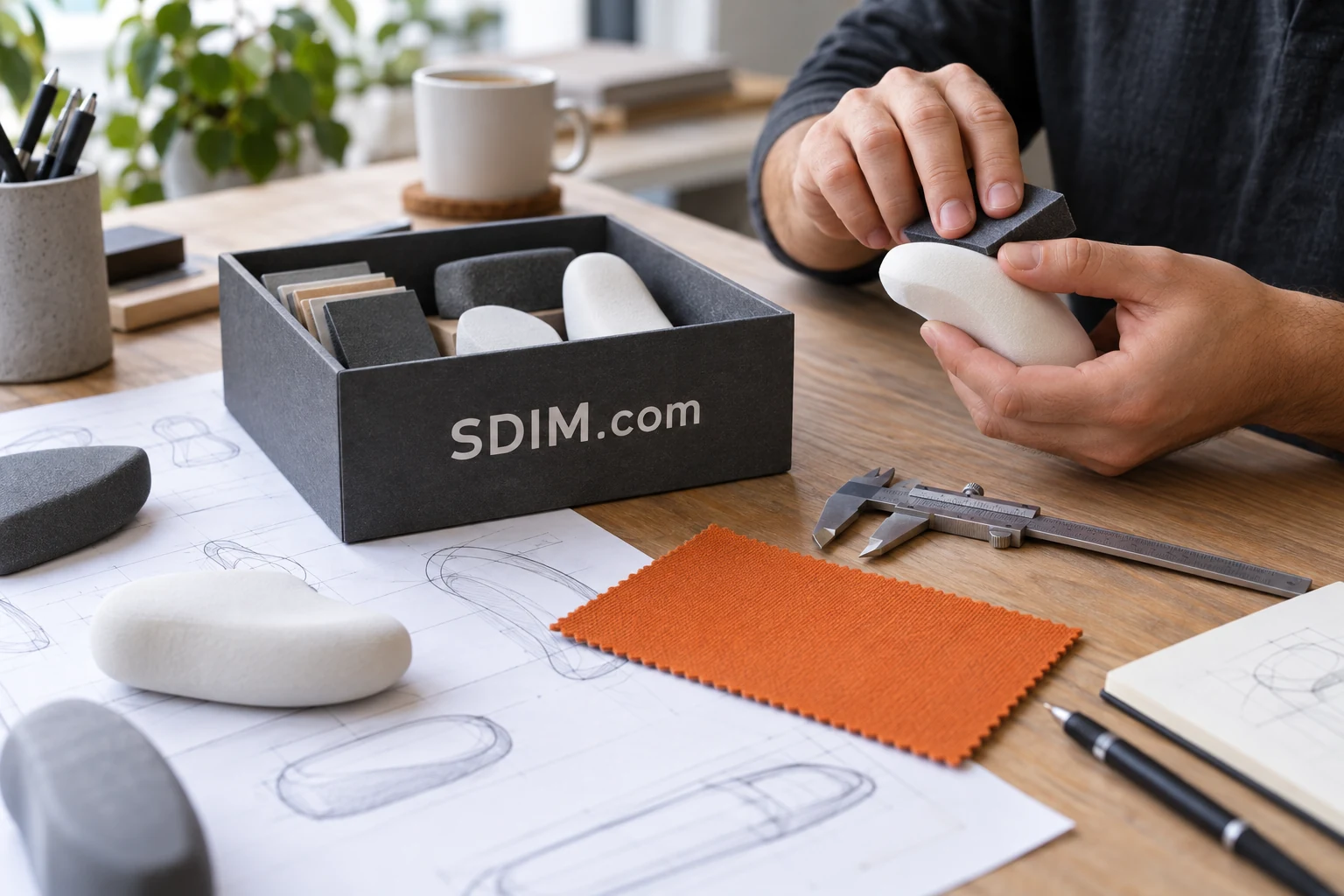
Some design problems sit between disciplines. A physical device needs an understandable setup flow. An exhibition object needs a digital companion. A piece of workplace equipment needs controls that make sense in the environment where people use it. The project can become awkward when the object and the interface are discussed in separate rooms.
This is an illustrative direction for a future owner of SDIM.com: a design practice organized around those connected experiences. SDIM would be the practice’s initial-based name, with a clear description of its work alongside it. The first offer would center on a prototype and a decision, giving a client something specific to commission and evaluate.
Choose a project that fits a small team
A new practice should identify the kinds of problems it can responsibly take on. A tabletop exhibition interaction, a connected office accessory or a service kiosk concept could each require a different combination of skills. Select one category based on the actual team’s capabilities, access to users and ability to produce a convincing prototype.
Avoid presenting a broad multidisciplinary portfolio before the practice has work to support it. A narrower offer can be more useful to a buyer. For example, the practice could help a client test the setup experience for a physical product before committing to detailed production design. The engagement would have a defined question, a tangible prototype and a documented recommendation.
The client should understand what level of realism is included. A foam model can help with size and reach. A clickable interface can help with a sequence of screens. Neither proves that a finished product can be manufactured, maintained or used safely in every condition. Explain what the prototype is intended to reveal and which decisions remain outside the engagement.
Sell a decision package
A first engagement could include a brief, a prototype, a facilitated review and a decision record. The brief identifies the user, the task and the uncertainty. The prototype makes the relevant behavior available for inspection. The review gathers observations. The decision record explains what the client should do next and what evidence remains missing.
Consider a fictional team preparing an interactive desk accessory for shared offices. The client is unsure whether a small physical control and a companion screen make the initial setup clear. The practice could build a model with a simulated control and a short digital flow, then observe people attempting the setup. The output might recommend changing the order of instructions and enlarging one physical cue before a more expensive prototype is commissioned.
The value of that engagement lies in reducing a particular uncertainty. A striking presentation can help communicate the work, but the client also needs the practical files: the reviewed version, the observation notes, the decision and a list of unresolved questions. Agree on those deliverables at the beginning so the final meeting leads to a usable handoff.
Plan the review while making the prototype
The prototype’s level of detail should match the question. If the team is testing whether people understand the first step, a polished animation of the entire product may distract from the task. If the question concerns how an object is held, the review needs something people can actually handle. Choose the medium for the evidence it can produce.
Recruit participants who reflect the intended setting as closely as the project allows. A colleague who helped design the flow already knows too much to stand in for an unfamiliar user. When recruitment is limited, document that limitation and use the results to shape the next test rather than treating a small internal review as broad validation.
Before a session, write down what the team expects to observe. This prevents the review from becoming an open-ended conversation about taste. The criteria might include finding the first control, recognizing the current state or recovering from an incorrect action. Record the behavior separately from the proposed design change, so several solutions can be considered afterward.
Build a portfolio around the question
A useful case study can begin with the client’s decision and show how the prototype informed it. Include the constraint, the tested interaction and the resulting recommendation. When work is confidential, agree in advance on what can be shared. A carefully scoped public example is more credible than a gallery that gives no indication of the team’s contribution.
The practice could reach early clients through industrial designers, software studios and product consultants whose projects cross a disciplinary boundary. A partner might already own the broader engagement and need a focused prototype review. Start with an explicit division of responsibility, including who speaks with the client, who owns the files and who handles revisions.
A second distribution route is a small published teardown of a common interaction. Use an original fictional example to explain how a physical cue and a digital instruction can contradict each other. The piece should demonstrate judgment and invite a relevant conversation, without making claims about results the practice has not achieved.
Make delivery repeatable without flattening the work
The practice would need a reliable way to estimate scope, manage versions and preserve review evidence. A lightweight project record can identify the current prototype, the next client decision and the person responsible for approval. Establish how many review rounds are included and what happens when the question changes midway through the project.
After a pilot, compare the proposed schedule with the actual work. Did recruitment take longer than expected? Did the client need production drawings that were never part of the offer? Those findings should shape the next engagement. They also help distinguish a profitable focused practice from a collection of attractive but unpredictable projects.
SDIM.com could hold the portfolio, the project approach and a direct inquiry path under one consistent identity. The next step is to define a pilot that the real team can deliver well. To explore acquiring the domain for that practice, introduce your plans through the inquiry form, including the work and customers you would serve.

About Michael Santiago
Michael Santiago founded i-Newswire.com in 2007. Its later identities, iNewswire.com and Newswire.com, made the brand shorter and more directly connected to its category. The business sold to Issuer Direct for $44 million in 2022. He now develops premium domains and companies through OnlineBusiness.com.